16/05/2026
Blogs
How to Choose the Right Solar Monitoring Company for Your Solar Plant?
How to Choose the Right Solar Monitoring Company for Your Solar Plant?
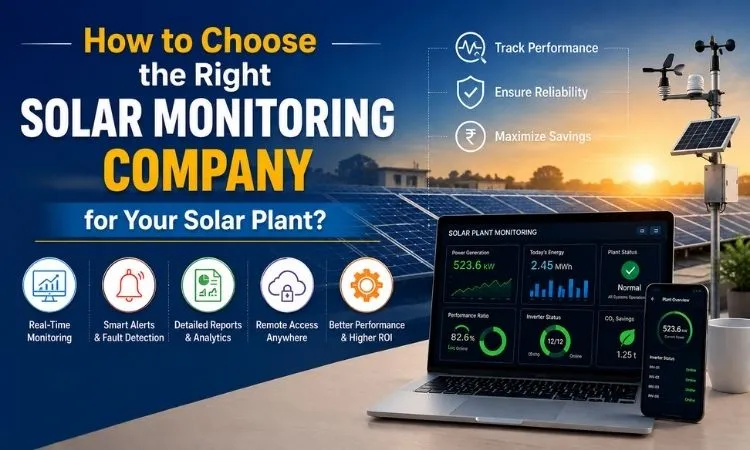
Solar energy is actually becoming a smart choice for modern businesses. Numerous factories, offices, hospitals, and warehouses, along with commercial buildings, are investing in solar systems in order to cut down electricity costs and improve sustainability. But installing solar panels is only the first step.
Without even proper monitoring, businesses can face several issues, such as low power generation, inverter failures, equipment faults, as well as unexpected downtime. And, most of these issues go unnoticed for a long time and then affect the overall performance of the plant.
That’s exactly why choosing the right solar monitoring company is an essential step. A good monitoring system helps you track real-time performance, identify faults earlier, and then improve energy efficiency. In this blog, we’ll discuss why solar monitoring actually matters, the key features to look for, some common challenges that businesses face, and how the right monitoring partner can help maximise solar ROI.
What Does a Solar Monitoring Company Actually Do?
A solar monitoring company actually helps businesses manage, track, and improve the overall performance of their solar power systems. Through this, companies not only monitor energy generation but also can identify faults, reduce downtime, and ultimately improve plant efficiency. Through real-time data tracking and smart analytics, businesses can even make sure their investment continues to deliver maximum savings and dependable performance.
5 Important Things a Solar Monitoring Company Does In Detail
1. Tracks Real-Time Plant Performance
Monitoring systems regularly track energy generation, performance of inverters, panel efficiency, along with power consumption. This approach gives the business comprehensive visibility into how exactly the solar plant is performing at any time.
2. Detects Problems Early
Early fault detection is really one of the biggest advantages of solar monitoring. The system can instantly identify inverter failure, sudden drops in energy generation, communication errors, or even equipment issues before they become a major operational concern.
3. Provides Remote Monitoring Access
Modern solar monitoring platforms utilize IoT technology that enables businesses to monitor their plans remotely with the help of mobile devices or even centralized dashboards. This feature is especially for businesses managing multiple solar sites.
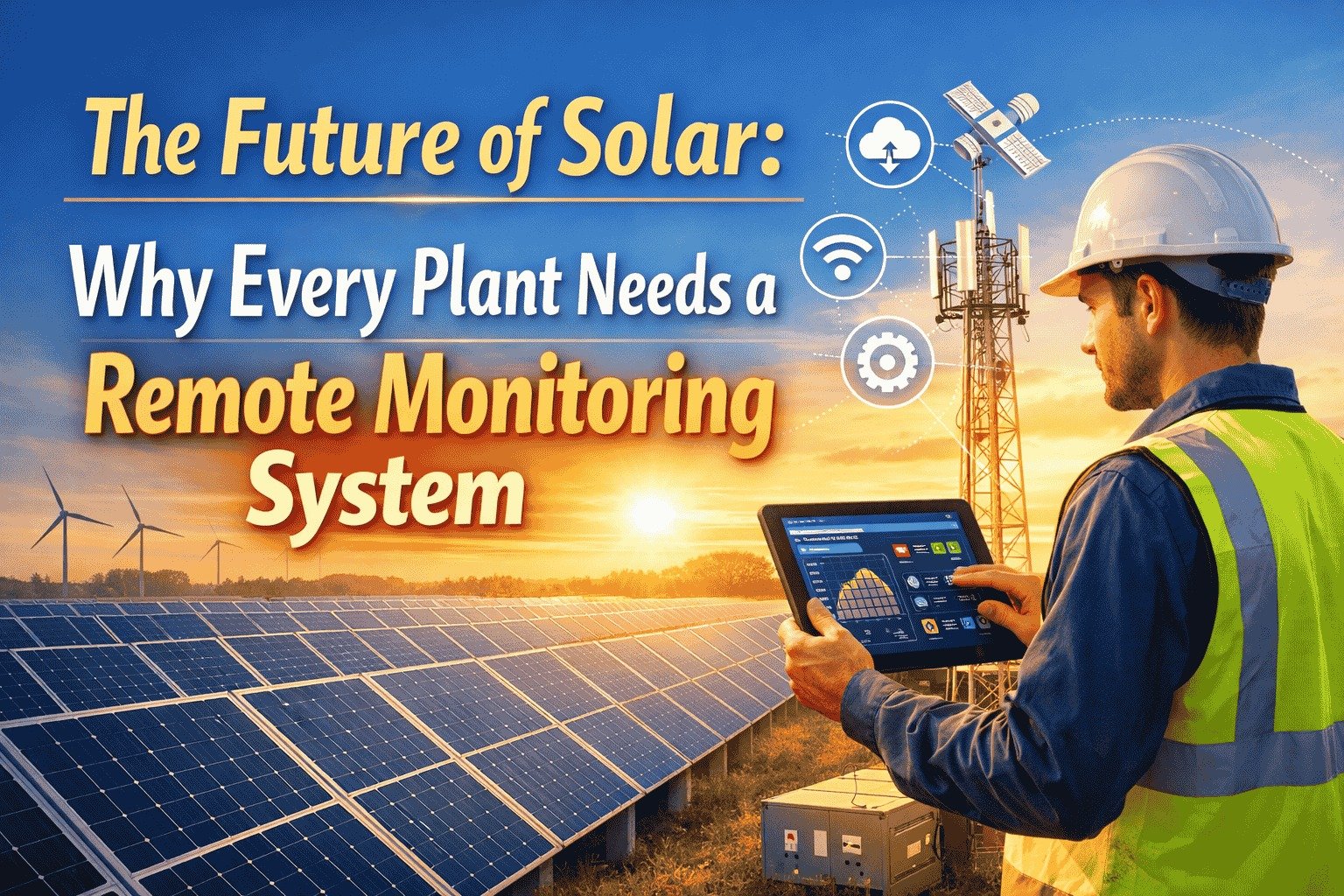
To understand how modern remote monitoring systems are transforming solar plant operations and improving efficiency, you can also read our detailed guide on remote monitoring systems for solar plants.
4. Generates Performance Reports and Analytics
Monitoring companies actually offer detailed reports on energy generation, efficiency trends, system health, as well as overall plant performance. Now, these insights help businesses optimize operations and improve long-term energy savings.
5. Helps Improve ROI and Reduce Downtime
Ongoing monitoring supports businesses in reducing maintenance costs, avoiding unnecessary energy losses, and improving overall system reliability. Better plant performance directly results in higher long-term returns on solar investment.
Numerous companies also offer hardware solutions like data loggers, RTUs, weather stations, and energy meters in order to support accurate performance tracking and advanced system control.
Key Things to Check Before Choosing a Solar Monitoring Company
Below are the key factors businesses should evaluate before choosing a solar monitoring partner:
1. Real-Time Monitoring Capabilities
Real-time solar monitoring enables businesses to monitor solar generation, inverter performance, grid connectivity, and the overall power system efficiency without any time lag.
Real-time monitoring gives instant visibility of plant operations to help detect sudden drops in performance, inverter shutdowns, and equipment faults immediately. Continuous monitoring maximises energy management, reduces downtime, and ensures stable performance of the solar plant.
2. IoT-Based Monitoring System
Today's solar plants need solar monitoring systems that are connected to the Internet and use IoT technology, which offer remote access to the plant, automated alerts, and monitoring of plant performance in the cloud.
These intelligent monitoring solutions provide integration between solar panels, inverters, sensors, and energy meters within a centralized platform. Multiple solar sites can be monitored remotely, and predictive maintenance and operational efficiency can be enhanced.
Weather forecasting and environmental monitoring also play an important role in improving solar plant performance and predictive analytics. To understand how IoT-based weather monitoring systems support smarter solar operations, you can read our detailed blog, IoT-Based Real-Time Weather Monitoring and Forecasting.
3. Solar SCADA Integration
Solar SCADA systems are suitable for industrial solar applications and utility-scale solar farms, offering more sophisticated plant monitoring and automation solutions.
Integration with SCADA helps businesses to monitor solar operations centrally, remotely control equipment, and produce detailed solar performance analytics. These systems enhance system reliability and enable large-scale solar system management.
If you want to understand how Solar SCADA helps businesses improve centralized control and solar plant automation, you can also read our detailed blog, Solar SCADA Explained: Revolutionising Plant Management.
4. Dashboard & Reporting Features
The solar monitoring dashboard should be simple, easy to use, and information-driven.
Power measurement, energy monitoring in real time, graphical energy reporting, historical data analytics, and mobile access are some of the features that assist businesses in monitoring solar efficiency and detecting performance problems in a timely manner.
Good reporting also aids maintenance planning, energy optimization, and solar asset management for the long term.
5. Device & Inverter Compatibility
A good solar monitoring system must be compatible with various brands of inverters, weather monitoring systems, energy meters, data loggers, and third-party devices.
High device compatibility allows for successful communication in the entire solar power system and offers a unified view of solar plant operations. It is also an easier way to expand solar and upgrade systems in the future.
6. Alerts & Fault Detection System
The advanced solar monitoring solution should automatically alert the user for inverter failure, low power generation, communication failure, and plant downtime.
Mobile applications, SMS or emails provide instant alerts to help maintenance teams respond quickly and minimise disruption to operations. Early detection also aids in system reliability and preventive maintenance.
7. Scalability for Future Expansion
Describe how the design can be scaled up to accommodate future growth. Businesses may grow their solar PV over time, with the addition of new solar PV plants or the addition of more generation capacity.
A scalable solar monitoring software platform should provide multi-site monitoring, support future device integration, allow software upgrades, and increase plant capacity.
This will make sure that solar infrastructure is managed smoothly without having to change monitoring later.
8. Customer Support & Technical Assistance
Good technical support is crucial for the uninterrupted operations of the solar plants. A professional solar monitoring company should offer installation support, remote troubleshooting, software updates, system integration support, and AMC services.
In conclusion, reliable after-sales support is crucial for ensuring that businesses can maintain the performance of their solar energy systems, minimize downtime, and enhance overall efficiency over time.
Common Mistakes to Avoid While Choosing a Monitoring Partner
1. Choosing Only Based on Price
One of the most common mistakes is selecting a monitoring system only because it is cheaper. Low-cost solutions may lack important features such as real-time monitoring, advanced analytics, fault detection, and proper technical support. Over time, this can lead to operational issues, downtime, and higher maintenance costs.
Instead of focusing only on pricing, businesses should consider overall reliability, long-term performance, and support capabilities.
2. Ignoring Technical Support
Even the most sophisticated solar monitoring systems need periodic updates, problem-solving and technical support. If businesses don't receive the necessary support when the inverter fails, they may experience communication issues or even system downtimes.
A reliable monitoring company that is reliable should provide a speedy response, be able to troubleshoot remotely, and provide maintenance and ongoing assistance.
3. Selecting Non-Scalable Systems
Businesses grow up solar grid size over time with additional plants or capacity. A non-scalable monitoring system can result in integration problems and complexity in the future.
A platform for businesses should offer the ability to monitor multiple plants, new device integration, and increased capacity without having to replace the entire system.
4. No IoT or SCADA Integration
To manage modern solar projects, intelligent monitoring and automation are necessary. IoT-based monitoring and Solar SCADA integration are absent in basic systems without centralized visibility, predictive maintenance, and advanced analytics.
Automated solutions for monitoring support businesses to detect faults, automate operations, and facilitate the management of multiple solar sites.
Why are IoT-Based Monitoring Solutions the Preferred Choice for Modern Solar Plants?
The deployment of solar monitoring systems with IoT is becoming more crucial for modern solar plants as it offers a real-time view and operational intelligence. The systems enable remote monitoring, cloud-based analytics, automated alerting, central management, and predictive maintenance.
With several plants being monitored remotely, businesses can detect problems more quickly and minimize manual inspections, boosting their overall operational efficiency.
How the Right Monitoring Partner Can Help with ROI?
Businesses can achieve better energy generation, less downtime, and higher long-term solar ROI with a reliable solar monitoring company.
Energy losses are prevented, and system reliability is enhanced by continuous performance tracking and early detection of faults. Savings and profitability over the long haul can be substantial, just from marginally better plant use.
A robust monitoring solution can assist businesses:
-
Reduce downtime
-
Detect faults early
-
Improve energy efficiency
-
Lower maintenance costs
-
Optimize plant performance
Why Do Businesses Choose PowerAMR for Solar Monitoring Solutions?
Businesses opt for PowerAMR for Solar Monitoring Solutions for a variety of reasons. PowerAMR is a preferred solar monitoring solution for businesses for many reasons.
There is more to a solar project than just simple monitoring dashboards. The businesses require intelligent solar monitoring systems that provide real-time tracking, centralized control, analytics and long-term support for their operations.
PowerAMR offers full solar monitoring solutions for commercial, industrial, and utility-scale applications. The platform integrates weather monitoring, data loggers, and dashboards in cloud platforms, Solar SCADA with an IoT-based monitoring platform, creating a consolidated monitoring environment.
Here are the reasons why businesses chose PowerAMR:
-
Real-time monitoring
-
Multi-plant management
-
Access from a distance and cloud dashboards.
-
The type of device and inverter is compatible.
-
These will alert instantly and detect any faults.
-
In-depth reporting and analytics
The ability to scale up to accommodate additional growth.
With advanced monitoring technology and reliable technical support, PowerAMR empowers businesses to more effectively leverage their solar infrastructure, minimize plant downtime, and maximize plant efficiency.
Conclusion
It is too important to choose the correct solar monitoring company to ensure the long-term operational efficiency and performance of solar plants. A trusted monitoring partner enables businesses to optimize energy production, minimize downtime, identify problems in their solar systems in time, and improve energy management.
With the growing use of solar power in industries and commercial buildings, it is increasingly important to invest in advanced solar monitoring solutions to ensure optimal long-term return on investment and energy savings.
Follow Us
Contact Us