16/05/2026


Blogs
How Wind Speed Sensors Improve Solar PV Performance in Monsoon Seasons?
How Wind Speed Sensors Improve Solar PV Performance in Monsoon Seasons?
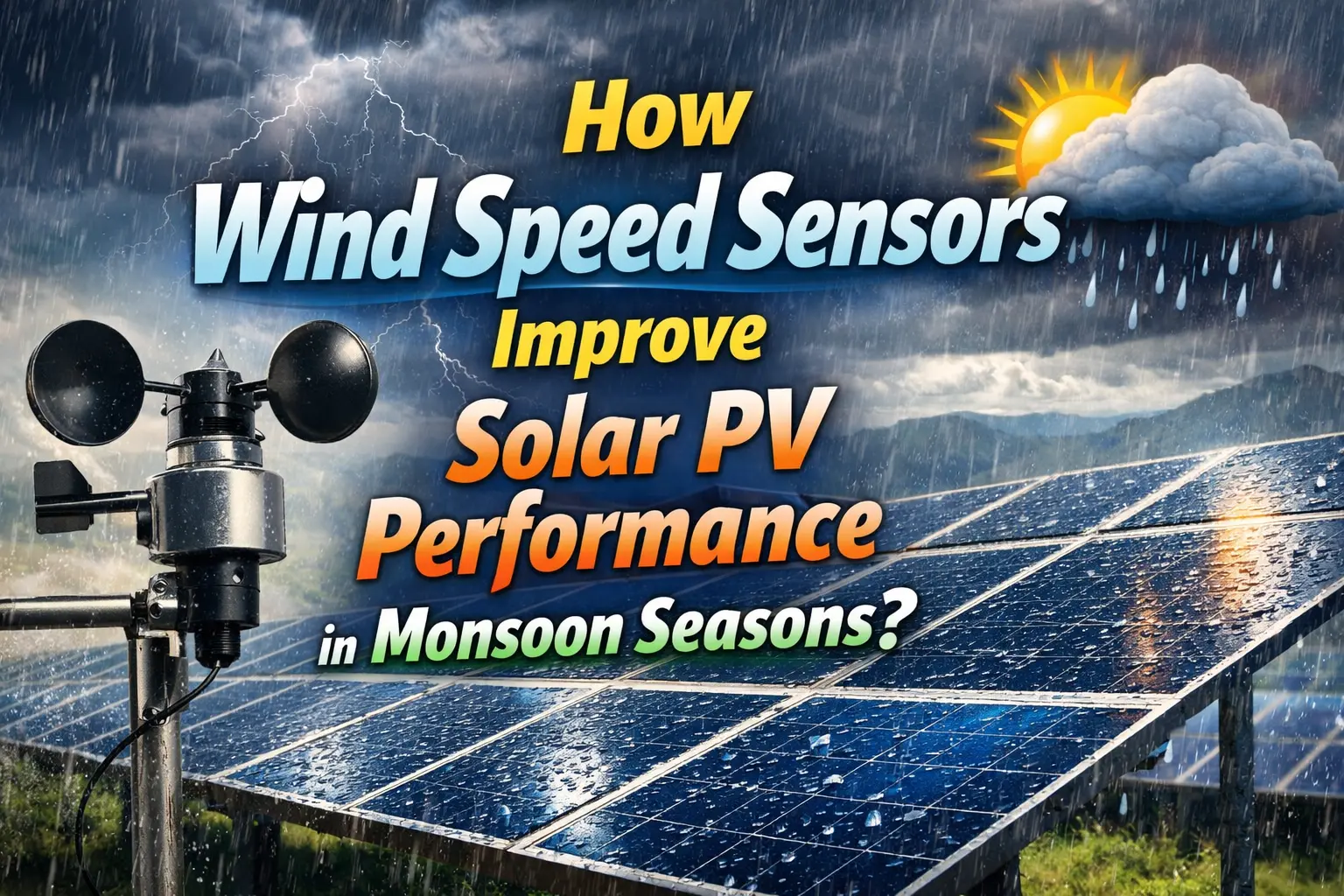
In India, the monsoon brings heavy rains, strong winds, and weak sunlight. This slows down solar energy production in solar farms. Solar Photovoltaic (PV) performance enhances the speed of energy production. This helps achieve a faster return on investment (ROI). Wind Speed Sensor ensures that the performance of solar panels is not affected by the monsoon.
The demand for wind speed sensors in solar farms is currently increasing. Using this sensor, you can easily map the wind speed. It provides real-time data to the system. It helps you with AI-based analysis. This data helps you make smart decisions. This makes protecting your solar panels easier.
Here, we will discuss how Wind Speed Sensors improve Solar PV performance in monsoon seasons in detail.
Understanding Monsoon Challenges for Solar PV Systems
Monsoon brings weather-related problems like heavy rain, strong winds, lightning strikes, etc. Heavy rain damages solar panels. Strong winds cause the panels to shake. Lightning strikes pose a risk of significant damage. Therefore, solar farm operators need the right equipment and caution.
Due to the monsoon, dense clouds gather and heavy rain occurs. This slows down energy production. Weak sunlight also reduces the efficiency of solar panels, which affects income. Proper monitoring is required to keep the system balanced.
Role of Wind Speed Sensors in Solar Farms
You can understand the role of wind speed sensors in solar farms through given points-
-
Structural Safety
Wind speed sensors in solar farms protect the farm's structure. They allow you to easily map wind speeds. They alert you to emergencies, allowing you to take immediate action on your farm.
-
Performance Improvement:
You can improve the data performance of your solar farm with a Wind Speed Sensor. This improves the condition of the solar panels. This keeps energy production stable and increases profits exponentially.
-
Real-Time Monitoring
Wind speed sensors continuously send data to you, allowing you to monitor the farm. The automation process reduces manual work, making operations easier.
How Wind Speed Data Optimizes PV Performance?
Here are the ways how Wind Speed Data optimizes PV performance-
-
Panel Control
Wind speed data is very helpful in panel control. It keeps the tracking system strong. It prevents significant damage. It reduces maintenance costs. It also increases the panel's lifespan.
-
Production Stability
Production stability is essential for a solar farm to run properly. Wind speed data allows you to plan properly, which improves operations. This increases trust and allows you to maintain a smooth workflow over the long term.
-
Smart Decisions
Wind speed data helps you make smart decisions on the farm. It helps you understand wind speed, reducing risks. This increases the need for proper data to keep the system balanced.
Real-World Case Studies from Monsoon Regions
Many solar projects are run in monsoon areas where wind speed sensors have been successfully used. Using a Wind Speed Sensor in coastal areas makes it possible to know about the speed of strong winds.
Using sensors in monsoon regions has shown stability in energy production. This has reduced maintenance costs, which has also increased the lifespan of the system.
Installation and Integration Best Practices
Here are the best installation and integration practices of Wind Speed Sensor-
-
Regular Maintenance
Wind speed sensors require regular maintenance. Therefore, regularly clean the sensor on the solar farm. If any signs of contamination appear, have it regularly inspected by a technician. This provides accurate data, reducing risk.
-
Selecting the Correct Location
Always install the wind speed sensor in a high location. Ensure that the area is open. This ensures accurate readings. Seek expert assistance for sensor installation.
-
System Integration
Connecting the sensor to the control system allows for proper integration. Pay attention to wiring and software connections. The data you receive should be clean and error-free. System integration increases automation and improves the reliability of your system.
Cost-Benefit Analysis and ROI
You can understand the cost-benefit analysis and ROI of Wind Speed Sensor through given points-
-
Initial Investment
Investing in sensors initially is essential. This provides investment security. This strengthens your plan and reduces future risk.
-
Cost Savings
A Wind Speed Sensor reduces system repair costs, thereby reducing losses. This helps maintain the solar farm's speed and maintains stable production. This reduces overall costs and increases profits.
-
Better Returns
Sensors stabilize production in solar farms, resulting in better returns. This allows you to recover your investment faster. This ensures timely project completion and long-term benefits. This also leads to a positive return on investment (ROI).
Future Trends in Wind-Sensor Tech for Renewables
Here are the future trends in wind-sensor tech for renewables-
-
IoT and Cloud Integration
IoT allows you to manage your farm smartly by connecting devices and sharing data. This allows for real-time monitoring. It helps you monitor your farm from any location and make your system smart. Cloud integration allows you to create a unified IT environment by connecting various cloud-based and on-premises systems and applications.
-
Smart sensor technology
Currently, smart sensor technology is providing better and more accurate data for solar farms. Its compact size allows for a durable design. It is also very easy to install, eliminating the need for a technician. It provides better performance, and it also reduces maintenance costs.
-
AI-based analysis
AI-based analysis provides accurate insights. It makes it easier to understand patterns. It analyzes past data and provides accurate predictions. This allows you to improve farm operations and stabilize production. This reduces costs and allows you to work with advanced technology.
Conclusion
In India, solar PV systems require special care and proper safety during the monsoon season. Therefore, a Wind Speed Sensor is useful. It provides accurate weather information, allowing you to take timely safety measures. This maintains system efficiency.
Currently, wind speed sensors are being used extensively in modern solar projects. Wind speed sensors play a vital role in maintaining stable and safe energy production in solar farms. This improves your return on investment (ROI), and the benefits increase over time.
PowerAMR provides high-quality wind speed sensors, weather monitoring devices and real-time solar monitoring solutions for solar PV systems.
FAQs:
-
What is a wind speed sensor, and how does it work with solar PV systems?
A wind speed sensor is a device used in solar farms that allows you to easily map wind speed. Its function is to transmit this data to the solar control system. By obtaining this information, you can protect your solar panels and prevent them from suffering significant damage.
-
Why do monsoons reduce solar panel efficiency, and how do wind sensors help?
Monsoons cause dense clouds and heavy rains. This reduces sunlight. Strong winds put pressure on solar panels. In this situation, wind speed sensors provide accurate wind information, allowing you to take appropriate action at the right time. This improves the performance of solar panels.
-
Can wind speed sensors prevent damage to solar panels during high winds?
Wind speed sensors can sense strong winds. They issue alerts in case of an emergency. This allows you to take immediate safety measures. This helps bring the panel to a safe position. It prevents damage to other components of the solar panel.
-
What are the best wind speed sensors for Indian monsoon conditions?
For Indian monsoon conditions, choose a wind speed sensor that is robust and waterproof. It remains durable even after heavy rain and strong winds. You may also prefer ultrasonic and industrial-grade sensors, which provide accurate data. They last a long time.
-
How much can wind speed monitoring improve solar energy output in rainy seasons?
A Wind Speed Sensor allows you to monitor wind speed. This makes your system more secure. During the rainy season, your production remains stable despite adverse monsoon conditions. This reduces losses and eliminates the need for increased maintenance costs.
Follow Us

Contact Us