16/05/2026
Blogs
Why Are Remote Monitoring Systems Essential for Solar Farms?
Why Are Remote Monitoring Systems Essential for Solar Farms?
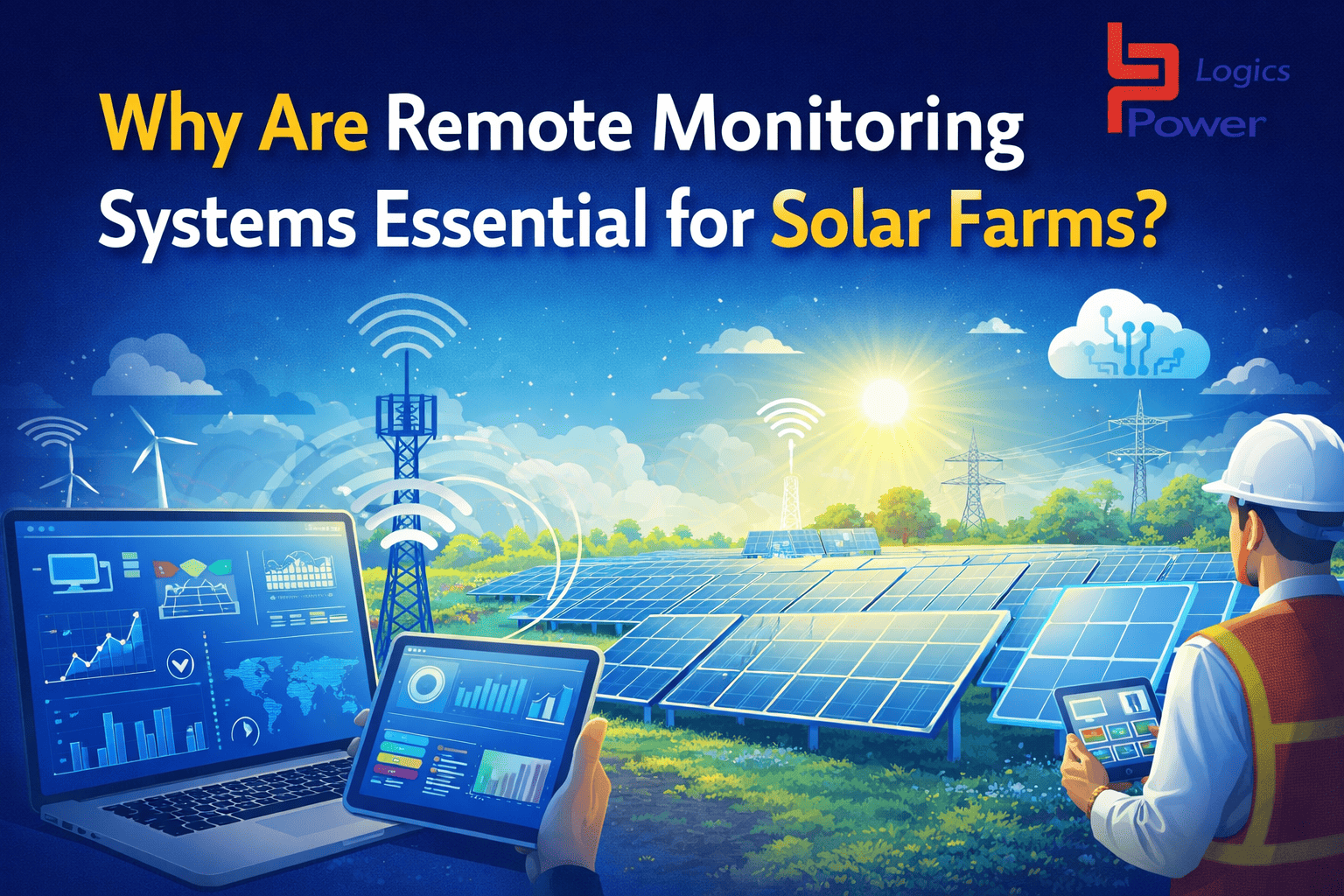
Do you know if your solar panels are working correctly? Think about it, when was the last time you checked? In a solar farm, we often focus only on production, but we tend to overlook the working process of the solar panels and their technical flaws.
It's important to understand that solar energy doesn't always work flawlessly. Sometimes, technical issues can lead to a drop in performance. Manually inspecting multiple solar panels simultaneously is also quite difficult. In such cases, a remote monitoring system proves to be a complete game-changer.
Here, we will discuss in detail why Remote Monitoring Systems are essential for solar farms.
What is a Remote monitoring system?
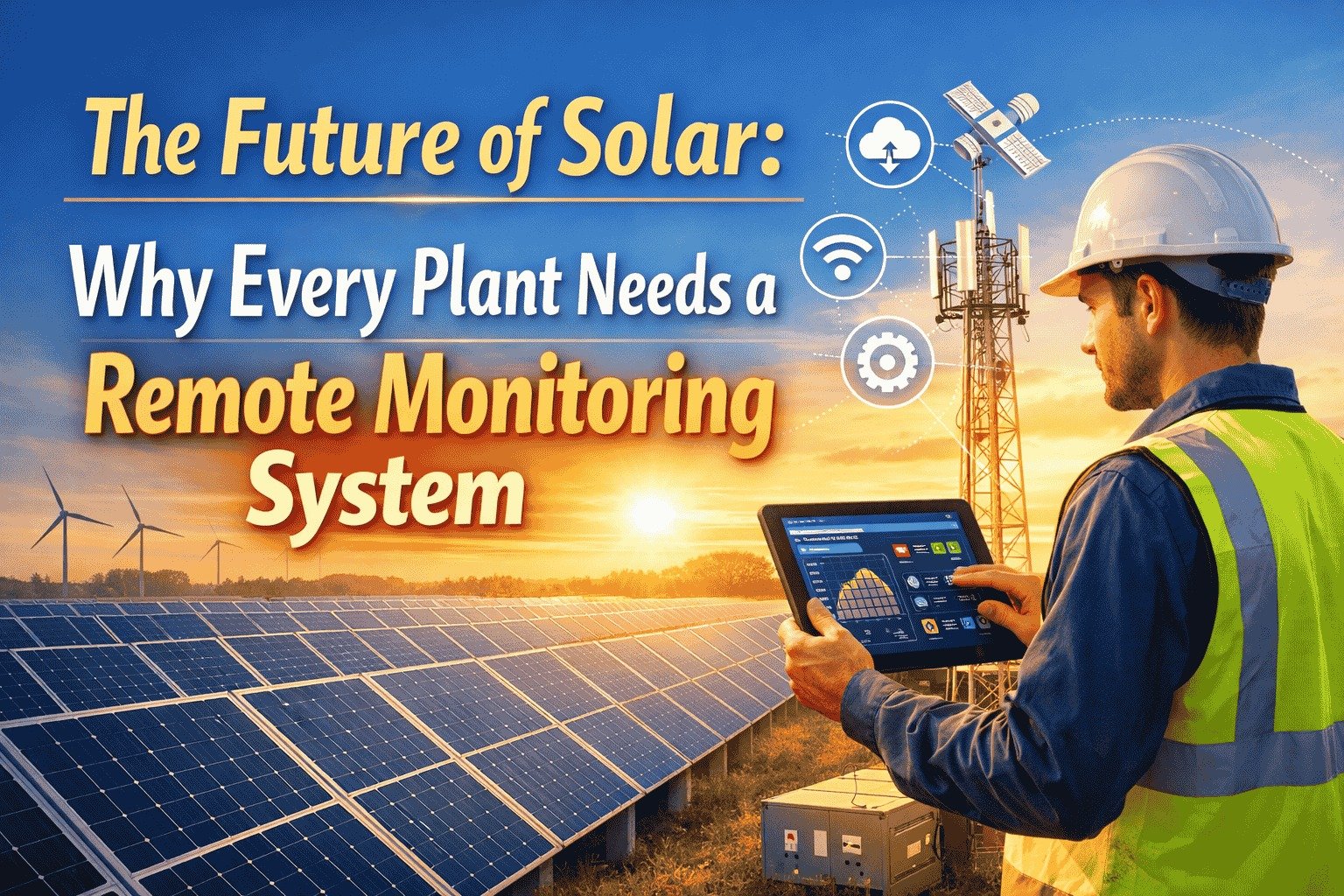
Remote Monitoring Systems allow for easy monitoring of solar farms. They greatly facilitate the operation of these farms digitally. This system typically collects detailed data from the solar farm and analyzes the production performance of the system.
Remote monitoring systems play a crucial role in optimizing solar energy in the future by collecting historical data. It's like a dashboard, easy to use. They help the solar farm make better decisions and facilitate better allocation of resources.
Remote Monitoring System Architecture:
Remote Monitoring Systems are composed of several components. Each of these components has its own role and importance. The system architecture includes the following components:
-
Sensors:
These measure the physical parameters of the solar farm and the solar panels present there.
-
Data acquisition hardware:
This collects and processes signals from the solar farm.
-
Communication gateway:
This plays a crucial role in enabling secure data transmission.
-
Software applications:
These are used for analysis in the solar farm.
-
Cloud or local server:
These are used to store and process the solar farm's data.
Key Reasons Why Remote Monitoring Systems Are Essential For Solar Farms:
A solar monitoring system is the best solution for advanced control and increased energy production in a solar farm. It provides security and optimized operation for the solar farm. It also helps improve grid stability and reduce operating costs.
Here are the key reasons to choose Remote Monitoring Systems for Solar Farms-
-
It improves energy production:
A remote monitoring system improves energy production. This system allows us to ensure that the production rate in the solar farm is normal, or if it's decreasing. This allows us to check the performance of any panel to increase production.
-
It reduces the need for manual inspection:
Solar farms require frequent inspections. With the help of a remote monitoring system, we can reduce the need for manual inspections. We can inspect the system without a technician on-site. Technicians are only needed in emergencies.
-
It is cost-effective:
Manually inspecting a solar farm is expensive. The availability of a remote monitoring system saves on transportation costs. It doesn't require high maintenance costs. This reduces maintenance costs. It is cost-effective and provides better performance.
-
It controls safety and risks:
With a remote monitoring system, we can monitor the temperature and voltage of the solar farm. It immediately issues an alert if any abnormal situation is detected. This reduces the risk of technical accidents. This keeps both the solar farm and the employees safe, preventing loss of life and property.
-
It helps in easy management:
Large solar farms are those that have thousands of solar panels. Therefore, managing them is quite challenging. With the help of a remote monitoring system, we can manage thousands of solar panels simultaneously. This makes the management simpler and more efficient. It allows us to monitor and operate different units simultaneously.
-
They enable the collection of data from solar farms:
A remote monitoring system is a system that allows us to collect data from solar farms using smart technology. It's easy to send and receive this data via the internet. With a remote monitoring system, we can obtain data from our solar farm every minute.
-
Real-time data for better decision-making:
Real-time data is essential to understand the actual status of a solar farm. With the help of collected historical data, solar farm management can make timely and informed decisions. Based on this data, proper strategies are developed to ensure the efficient use of resources. This leads to continuous improvement in performance.
Working Process of the Remote Monitoring: System
The working process of the Remote Monitoring Systems is simple and effective. They operate through a sophisticated multi-level process. Their primary function is to capture data, and then transmit and process this captured data at various levels to facilitate improved energy production performance at the solar farm.
You can understand its working process through the following steps:
-
Data collection: Sensors are strategically installed in the remote monitoring system. In the solar farm, these sensors measure parameters such as hydraulic pressure and temperature.
-
Data transmission: Communication networking is involved in the transmission of raw data. This includes various industrial protocols and wireless techniques, including CANbus, wired connections, etc. We use this to reach the central processing units.
-
Analysis: After data collection and transmission, the remote monitoring system uses special algorithms. This makes it easier to identify patterns using the collected data.
-
Secure storage: This system properly encrypts the processed information and stores it in a cloud environment so that it remains secure.
-
Issuing alerts: The remote monitoring system issues alerts when it observes that the readings have gone outside the predetermined safety parameters. This helps us avoid major damage.
Conclusion:
Currently, due to the increasing demand for solar energy, the number of solar farms is growing significantly. These farms utilize thousands of solar panels. Every solar farm should have a remote monitoring system. They increase energy production and reduce maintenance costs. It leads to improved performance of the solar panels.
Remote Monitoring Systems reduce accidents and insurance costs. They also enable optimized resource allocation, which is highly beneficial from a business perspective. It also reduces risks and enhances safety.
The solar farm operator can use this system to check the solar farm and its activities from a mobile device or computer. They don't need to be physically present at the solar farm or available there 24/7. By reducing the need for manual inspections, it lowers extra expenses.
Follow Us
Contact Us